The Stars Are Aligning for Workforce Housing Revitalization
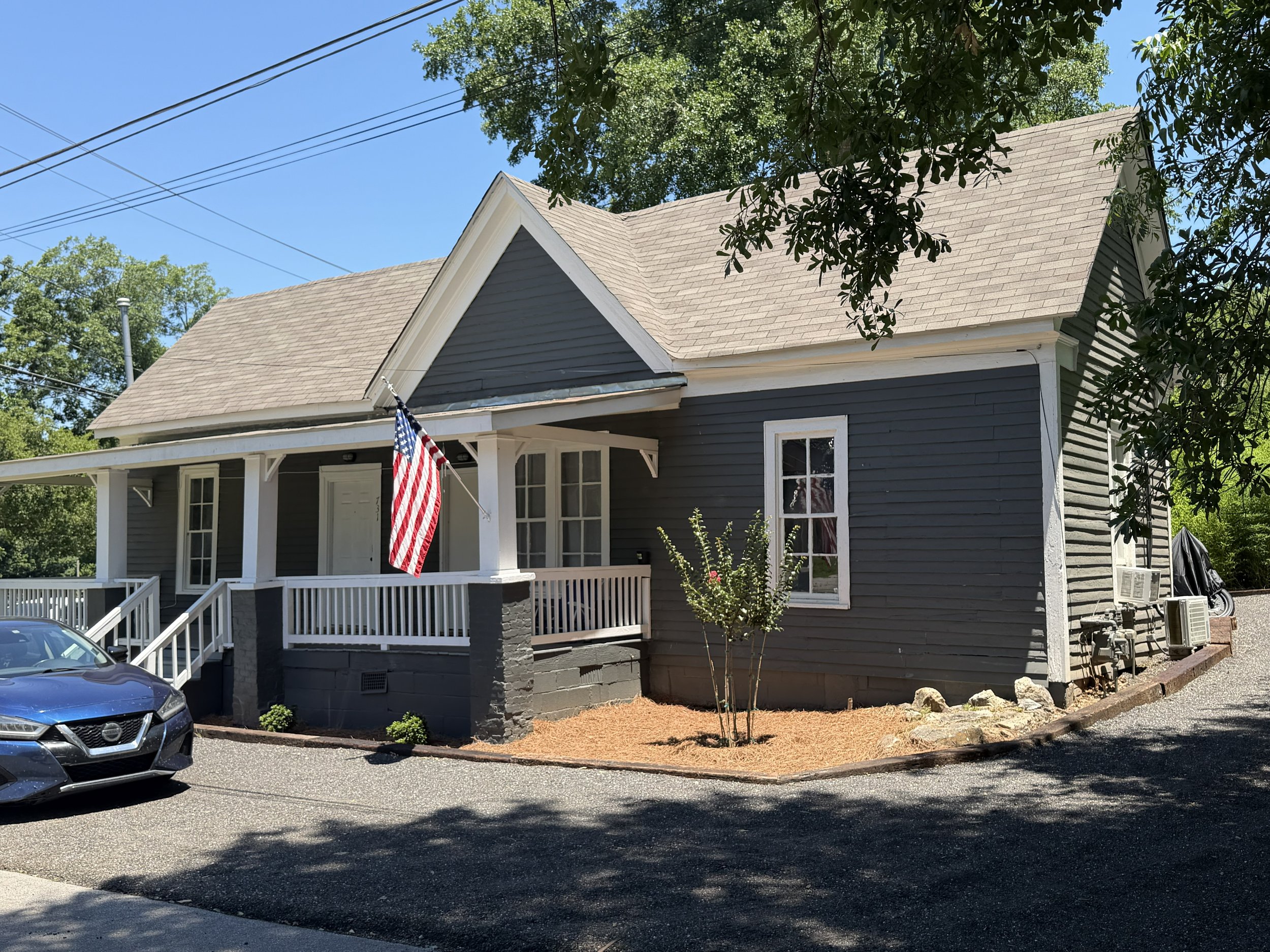
I’d like to share some thoughts… Reflecting back on exactly 5 years since Troy Williams and I launched Three Bulls Capital. It has been quite a ride. From labor shortages, to supply chain problems, then interest rates went bonkers. Next we endured a massive pipe freeze, an EF-3 tornado, a frozen housing market and so-forth. I’ve always said that the perfect conditions NEVER all exist simultaneously in Real Estate. We have learned a lot over 5 years together and I can’t wait to see what the future holds and we have some huge goals.
The question remains: how do we create more quality, attainable housing for working families?
The 21st Century ROAD to Housing Act has passed both chambers of Congress and, as of this writing, is awaiting final action by the President. The legislation is aimed at improving housing affordability, expanding supply, and placing new limits on large institutional ownership of single-family homes.
But one detail in the legislation deserves special attention: Congress appears to recognize that not all single-family rental operators are the same.
The bill would generally restrict large institutional investors that own or control 350 or more single-family homes from continuing to acquire more single-family homes. However, it includes a highly relevant carve-out for certain renovate-to-rent programs. Specifically, an acquisition may qualify as an “excepted purchase” if the operator substantially rehabilitates homes that fail to meet structural or core-system elements of local building codes and invests at least 15% of the purchase price into improvements. That distinction matters.
There is a meaningful difference between simply buying up housing stock and taking distressed, under-maintained homes and making them safe, clean, functional, and professionally managed.
That distinction sits at the heart of how value-add housing operators can play a constructive role in community revitalization.
Value-Add Housing Is Not the Problem BUT, it is Part of the Solution.
In many second- and third-tier cities across the Southeast, the housing shortage is not only about new construction. It is also about the condition of the existing housing stock.
Former textile towns and small industrial communities often have strong bones: walkable neighborhoods, historic downtowns, rail access, highway connectivity, local employers, and generations of workforce culture. But many of these communities also have aging homes that need meaningful reinvestment.
A house that is vacant, unsafe, or functionally obsolete is not helping a working family. Whereas, a renovated home with updated systems, professional management, and long-term stewardship can.
The ROAD to Housing Act’s renovate-to-rent exception appears to recognize this reality. It encourages capital to flow not just into new housing supply, but into the revitalization of existing housing stock, especially in communities where replacement cost, household incomes, and construction economics often make large-scale new development difficult.
Policy Is Beginning to Recognize Reinvestment
The ROAD to Housing Act is not the only federal signal.
The recently enacted One Big Beautiful Bill further incentivizes investment in real estate improvements by restoring 100% bonus depreciation for certain eligible property. While each investor and operator should consult their own tax advisors, this provision may be meaningful for firms that are putting capital into improvements, building systems, equipment, and other qualifying property.
The broader theme is clear: policy is beginning to reward reinvestment.
When you combine:
* the ROAD to Housing Act’s recognition of renovate-to-rent activity,
* the 15% improvement threshold for certain value-add operators,
* the need for quality workforce housing in smaller cities,
* the return of 100% bonus depreciation for eligible property,
* and the resurgence of manufacturing, logistics, defense, energy, and industrial activity across the Southeast,
a powerful alignment begins to emerge.
The next chapter of housing policy may not be only about building new units in major metros. It may also be about rebuilding the overlooked towns that already have infrastructure, workforce history, and local identity.
Workforce Housing Is Infrastructure
Housing is not separate from economic development. It is economic development. A factory expansion does not work if workers cannot live nearby. A hospital cannot recruit staff if nurses, technicians, and support workers cannot find attainable housing. A downtown cannot revive if the surrounding neighborhoods remain neglected. A small city cannot grow if its housing stock is deteriorating faster than it is being repaired. Quality workforce housing is part of the physical infrastructure that allows local economies to function.
That is why responsible value-add operators have an important role to play. The goal should not be simply to aggregate homes. The goal should be to put capital back into neighborhoods, improve the resident experience, stabilize blocks, support local trades, and help communities absorb the next wave of economic growth.
Why This Moment Matters
For Three Bulls, this moment aligns with a strategy we have been focused on for years.
We focus on overlooked Georgia milltowns and second- and third-tier markets where institutional capital has historically been limited, but where the need for quality housing is clear. We do not believe revitalization happens from a spreadsheet alone. We underwrite markets, but we also walk the streets, run the neighborhoods, drive the blocks, meet local stakeholders, and study where investment can make a lasting difference.
The ROAD to Housing Act appears to validate a core principle of this approach:
Owning homes is not enough. Improving them matters. Creating qualified new home owners in the community matters even more.
And when federal housing policy, tax incentives, local economic development, and community need all begin pointing in the same direction, it creates a meaningful moment for the workforce housing sector.
The stars appear to be aligning for quality workforce housing in America’s second- and third-tier cities.
And for operators willing to do the hard, local, block-by-block work, this may prove to be an important period for community-centered housing revitalization.
Important Disclaimer
This article is for general informational and educational purposes only. It does not constitute legal, tax, accounting, investment, or financial advice, and should not be relied upon as such. Readers should consult their own legal, tax, accounting, and financial advisors regarding their individual circumstances.
This article is not an offer to sell, or a solicitation of an offer to buy, any securities, investment interests, fund interests, or other financial products. Any offering of securities, if made, would be made only to qualified prospective investors with whom the issuer has a substantive, pre-existing relationship, and only through confidential offering documents containing detailed information regarding risk factors, conflicts of interest, fees, expenses, and other material terms.
Any references to Three Bulls, its strategy, market observations, or federal policy developments are provided solely for discussion purposes and should not be interpreted as investment recommendations, performance projections, guarantees, or indications of future results. Past performance, market trends, tax incentives, or legislative developments do not guarantee future outcomes.